The sacrifice of Ibrahim
Hadith explains the tenth of Dhu l-Hijja as the day on which the Prophet Ibrahim (a) was commanded to sacrifice his son Isma'il (a); as he laid the boy on the altar the angel Jibra'il brought a ram to be offered in his place. The pilgrims at Mina re-enact the obedience of father and son with the sacrifice that gives the feast its name, and Muslims everywhere who can afford it slaughter an animal and share the meat with the poor.
The day
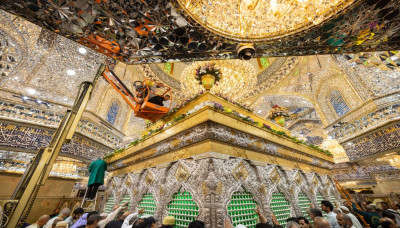
The eve is a night of worship, and the day begins with the ghusl and the Eid prayer with its takbirs. Fasting is forbidden, as on Eid al-Fitr. The Shia manuals add the ziyarah of Imam Husayn (a) and the recitation of Du'a al-Nudba, the supplication of lament for the absent Imam, on the morning of the feast, and the days that follow — the days of tashriq — are given to the takbirs after each prayer.
Observance
Eid al-Adha is a public holiday, often of several days, in every Muslim country, and the largest gathering of the year at the Hajj. Eight days later the Shia celebrate the Eid of Ghadir, so that the last third of Dhu l-Hijja is a season of feasts.
Written for Shia Online Community. Dates and facts are checked against the references listed below; where the tradition records more than one date, all are given.